
Pilot real research submersibles to the floor of the Mariana Trench.
Fact sheet
- Developer & publisher
- Zone Two Games (Tomáš Stankovič, Slovakia)
- Release
- Steam, 2027 · free demo in the browser now
- Platforms
- Steam (Windows, macOS, Linux planned) · web browser, desktop and mobile
- Languages
- English, Slovak
- Genre
- Calm exploration and simulation, no combat
- Contact
- tomas@tomasstankovic.dev
In HADAL you run a small research programme on a ship off Guam and pilot real kinds of research submersibles down to Challenger Deep, the deepest point on Earth, almost eleven kilometres below the surface. You start with a tethered robot and work up to crewed submersibles, one dive at a time.
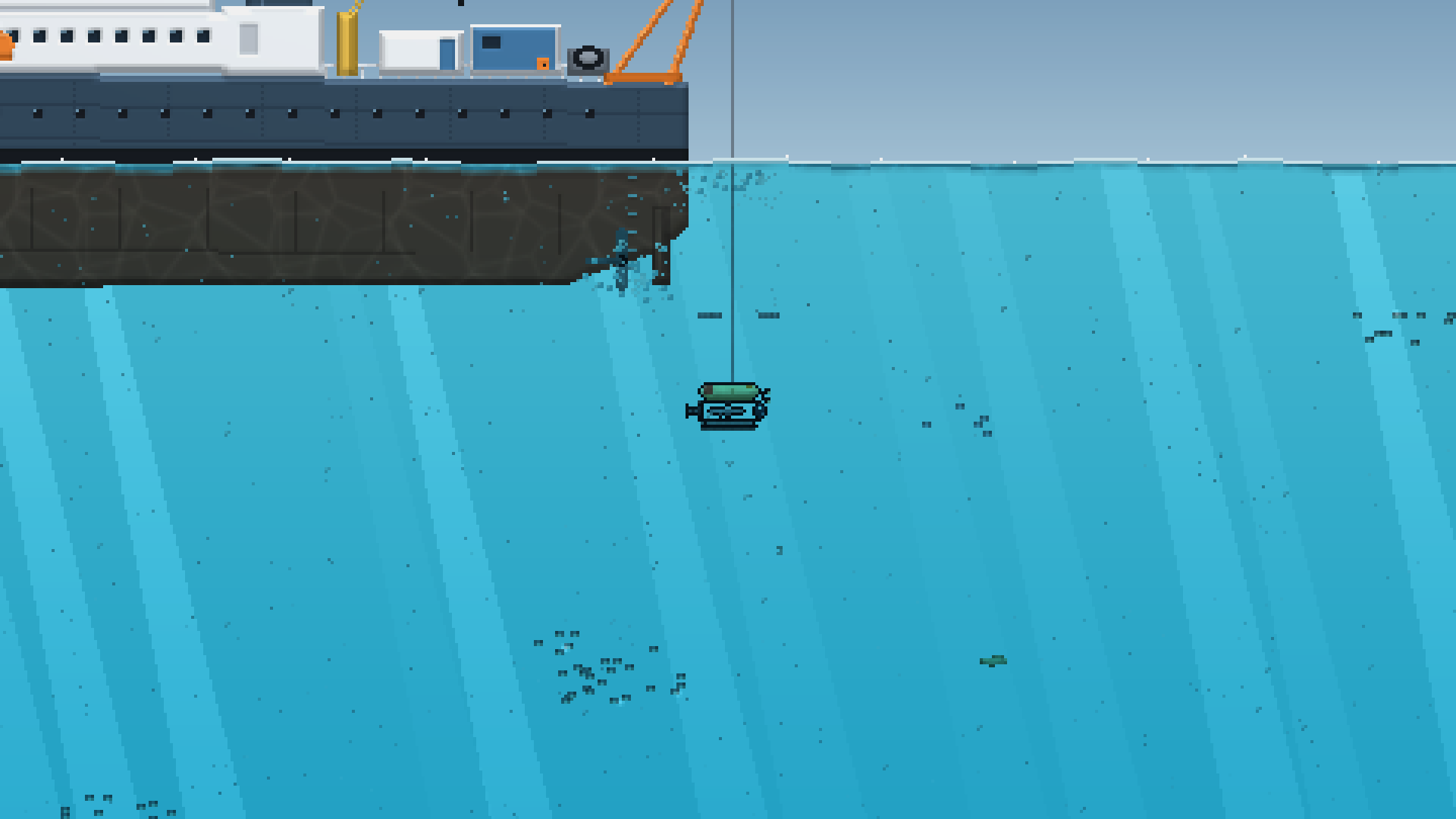
Nothing attacks you. A dive ends when the battery runs flat or the hull goes past its rating. You sink on steel weights and drop them to come back up, the cold drains the battery, and the hull creaks when you take it deeper than it is built for. Light fades as it does in the real ocean, so in the twilight zone a red animal is invisible.
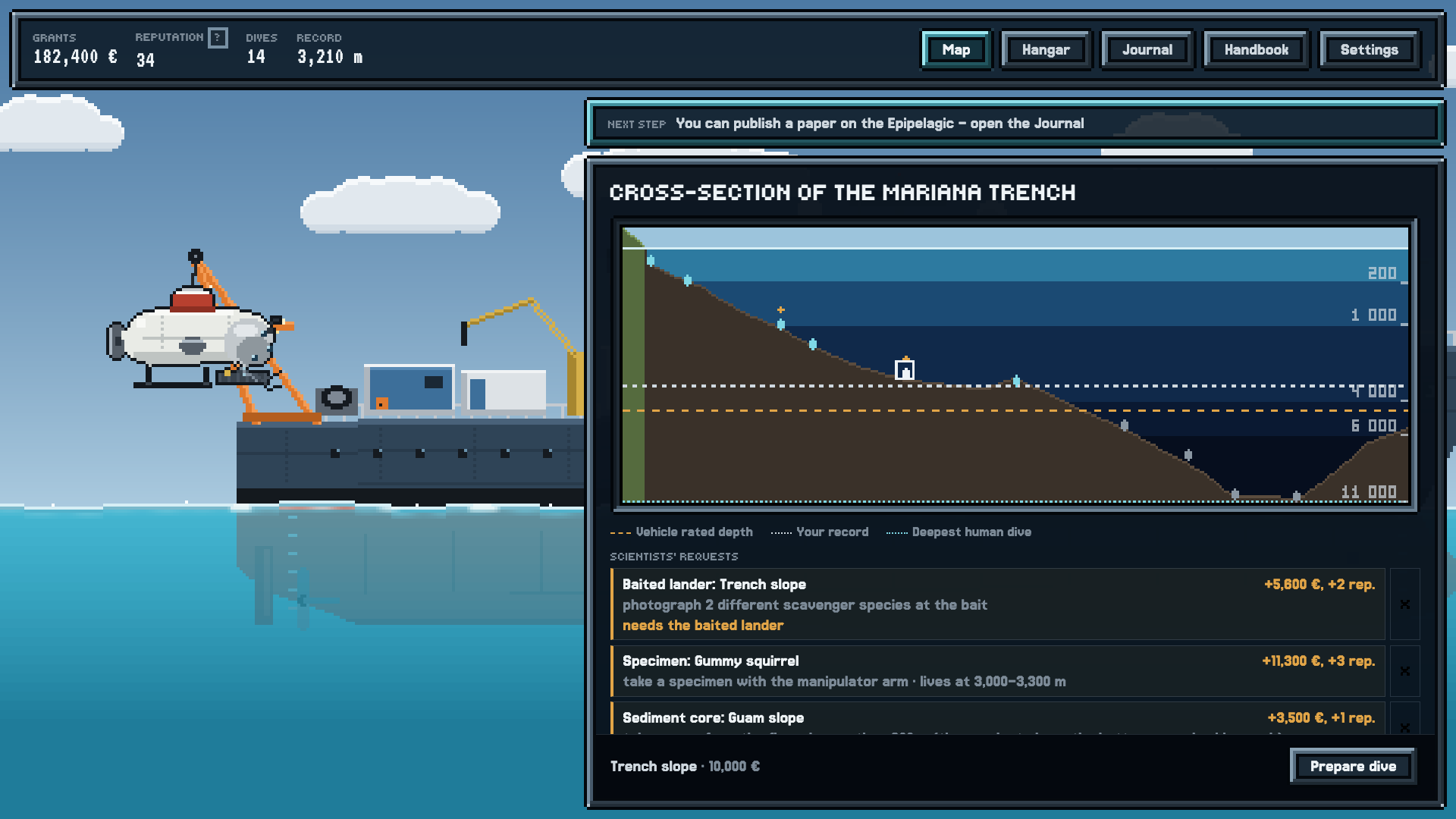
- 10 dive sites from 45 m to 10,905 m, day and night
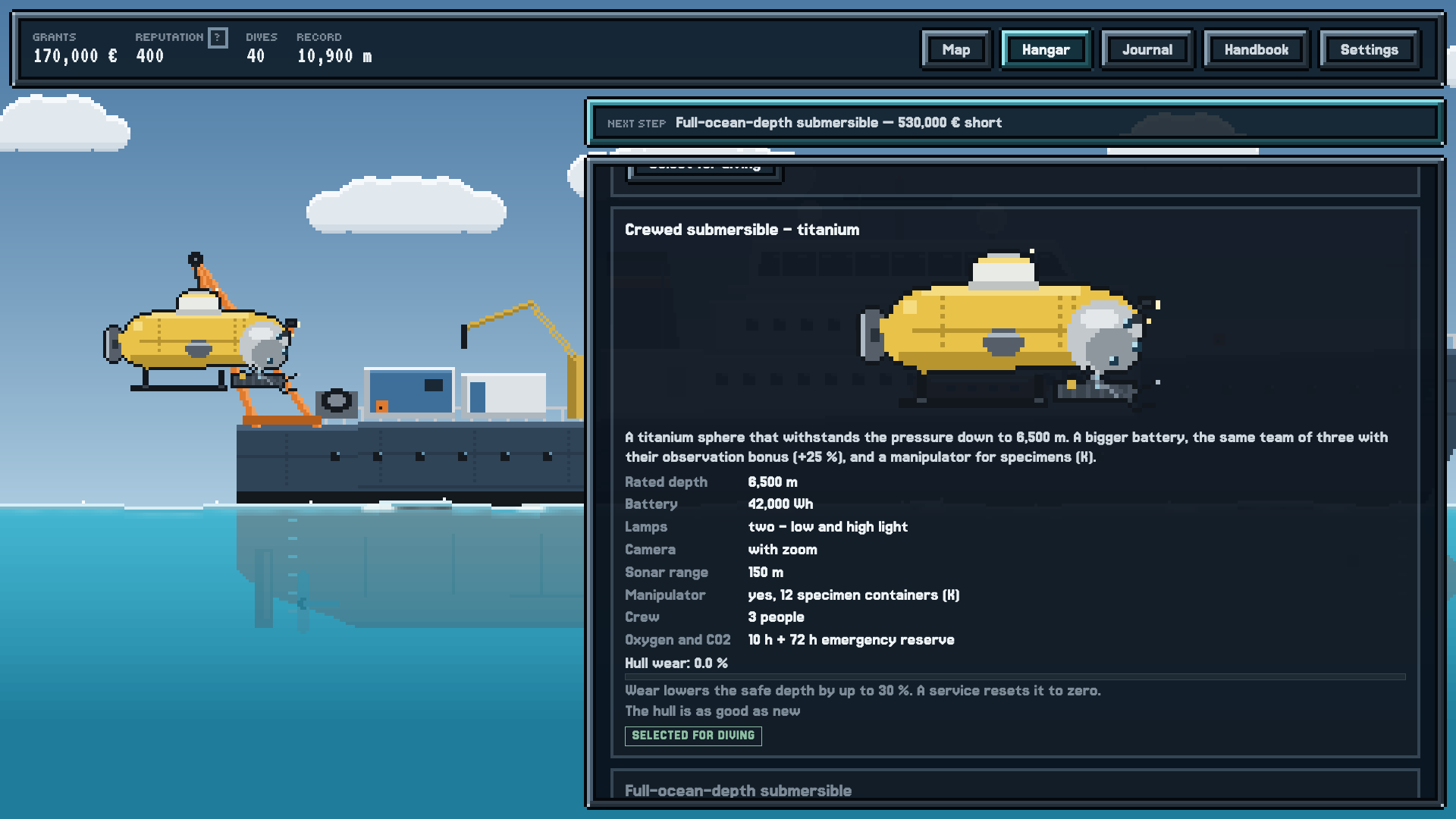
- 6 vehicles, from a tethered ROV to a full ocean depth submersible
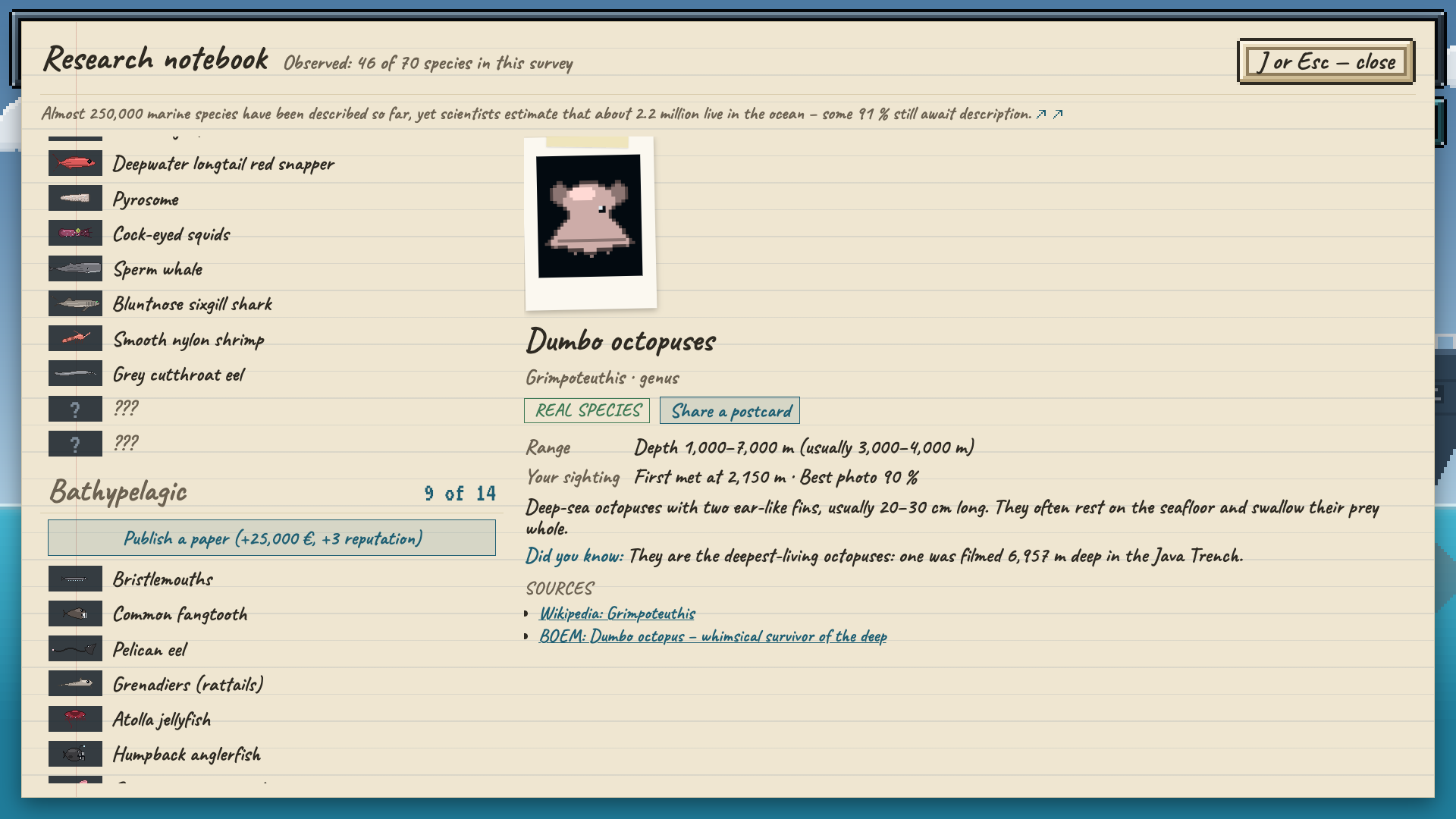
- 50+ real deep sea species, each with its scientific source. The few invented creatures are marked as invented
- A research career of 6 to 10 hours: grants for good photos, requests from the expedition's scientists, better cameras and batteries
- Pixel art drawn by the game's own code, sound synthesised live
Trailer
61 s, 1920 × 1080, 60 fps. All footage and sound are recorded from the game.
GIFs
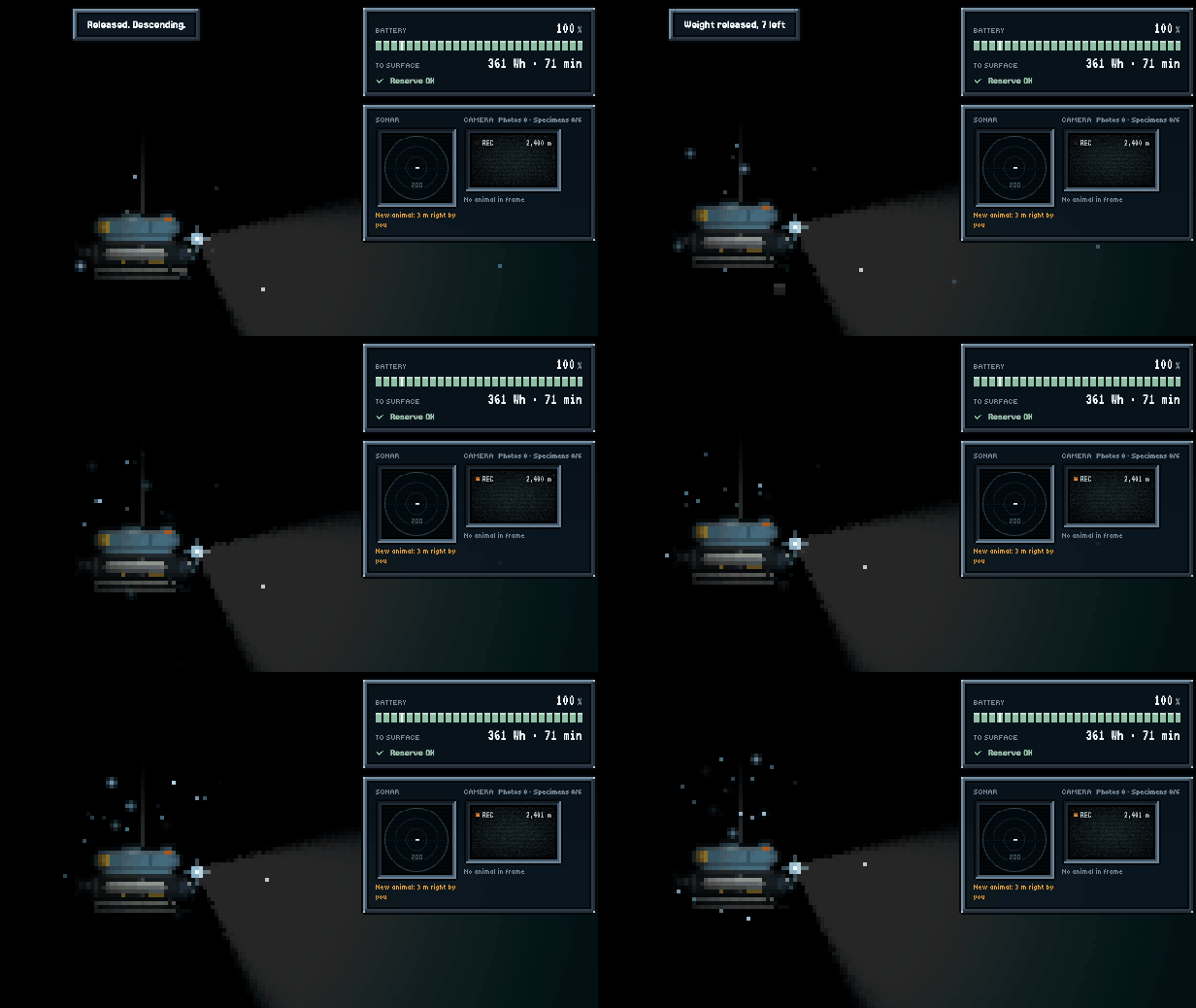
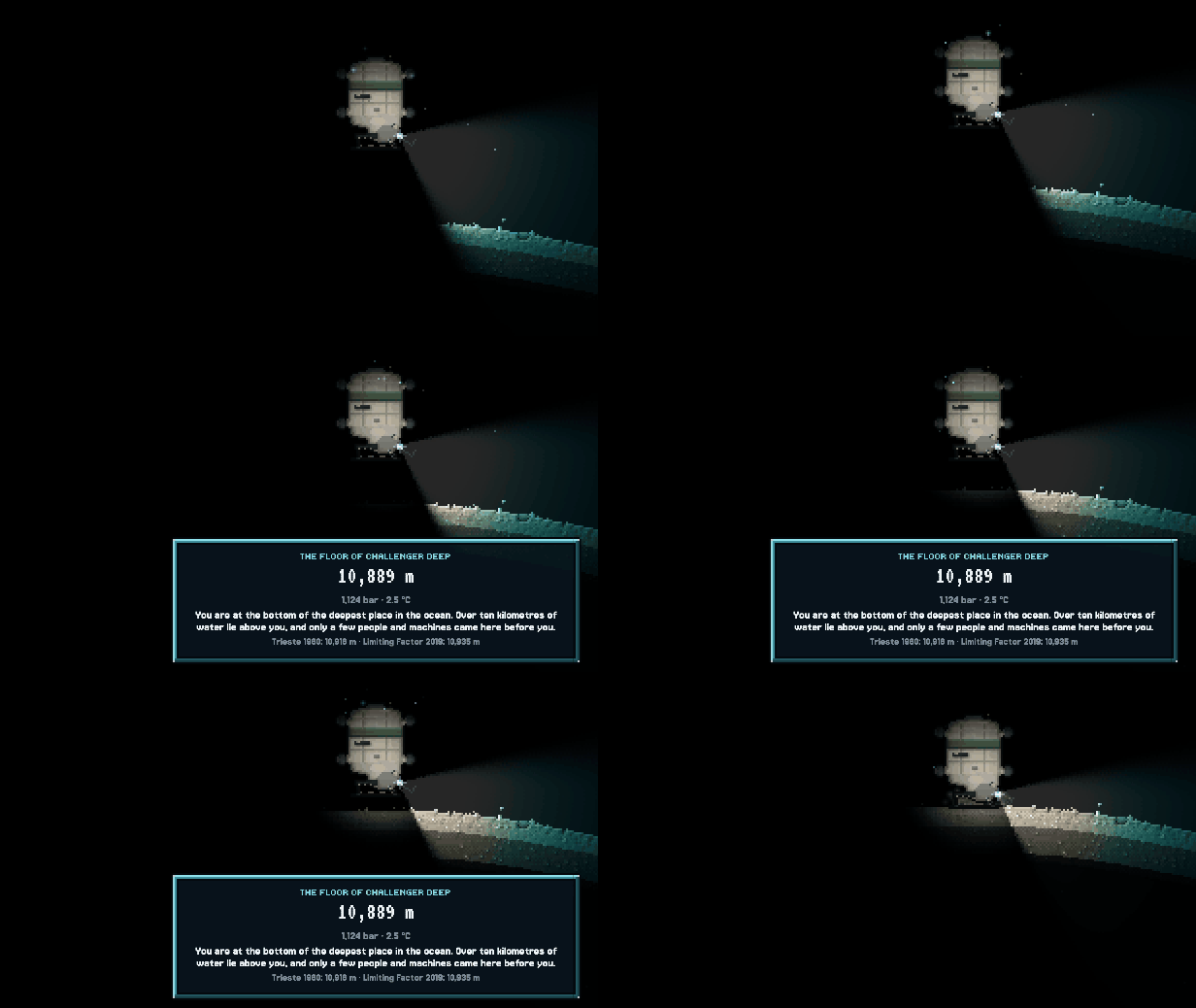
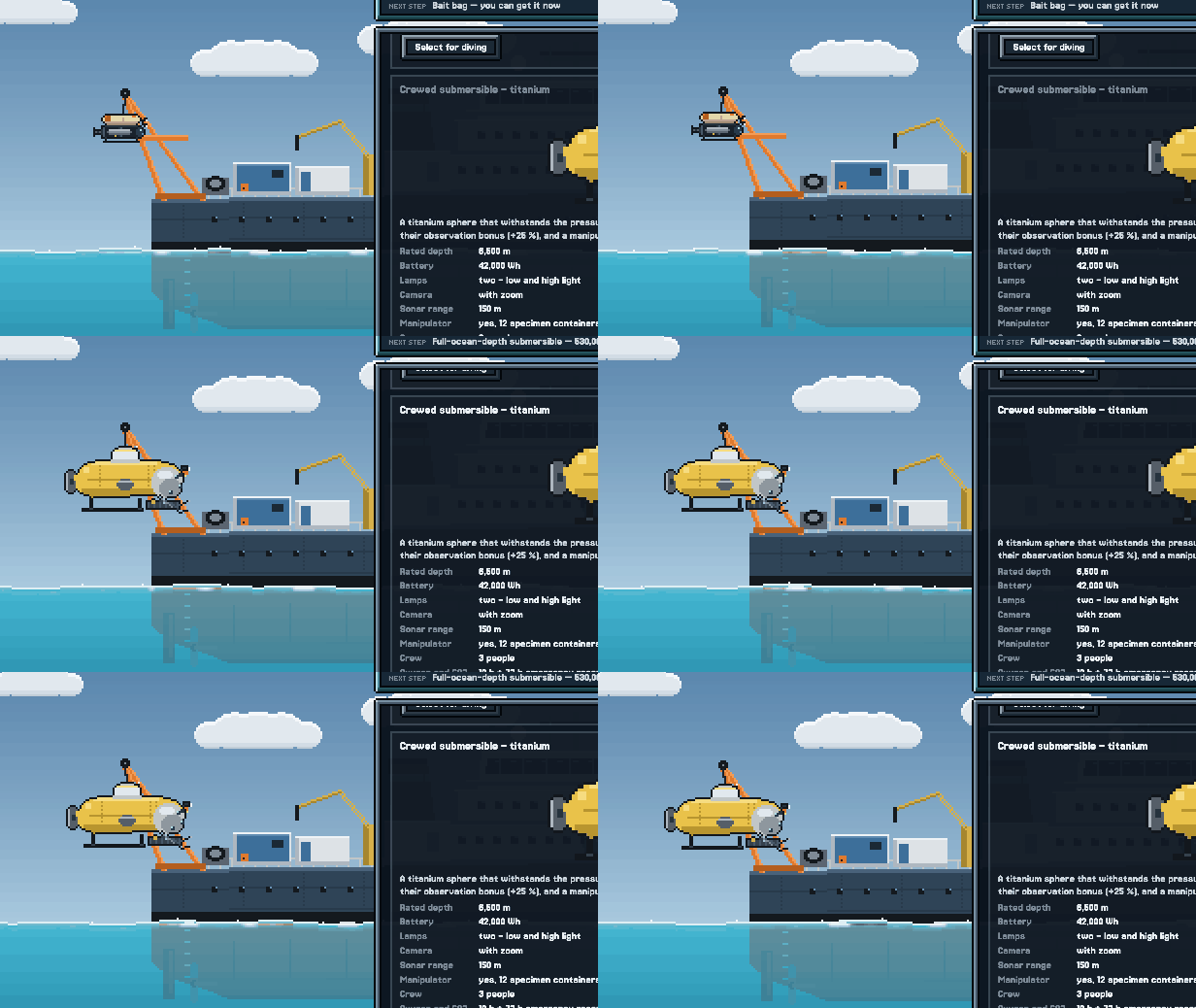
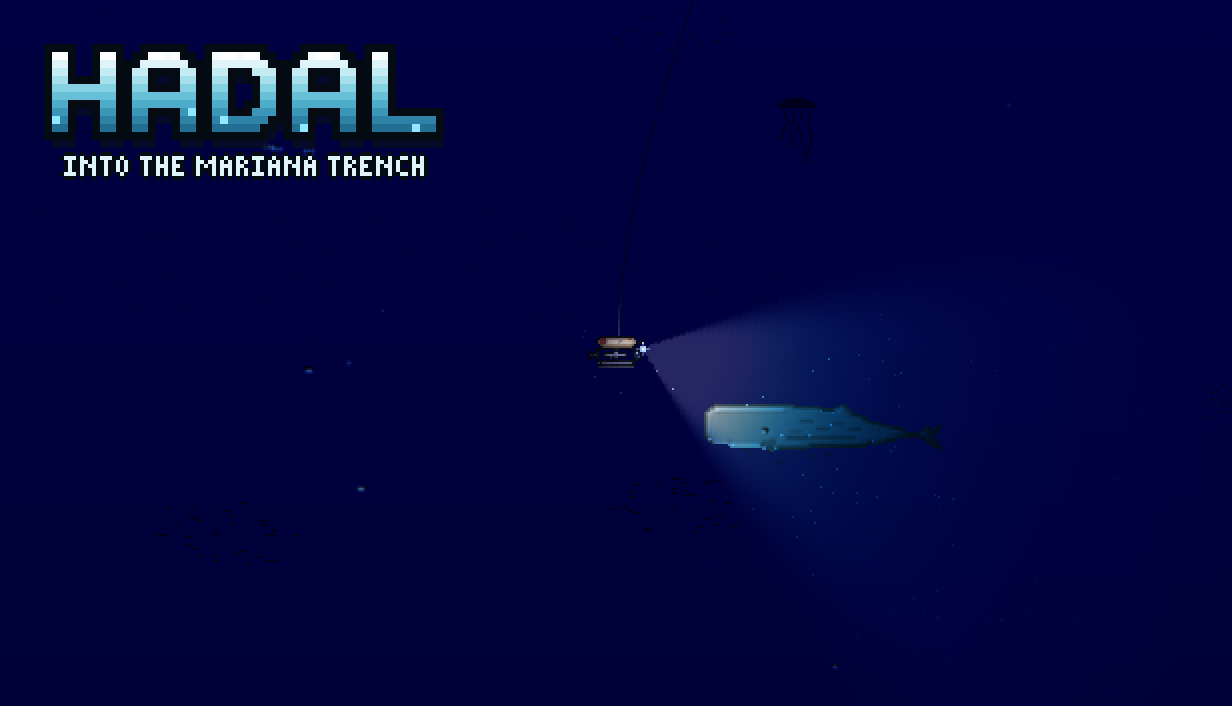
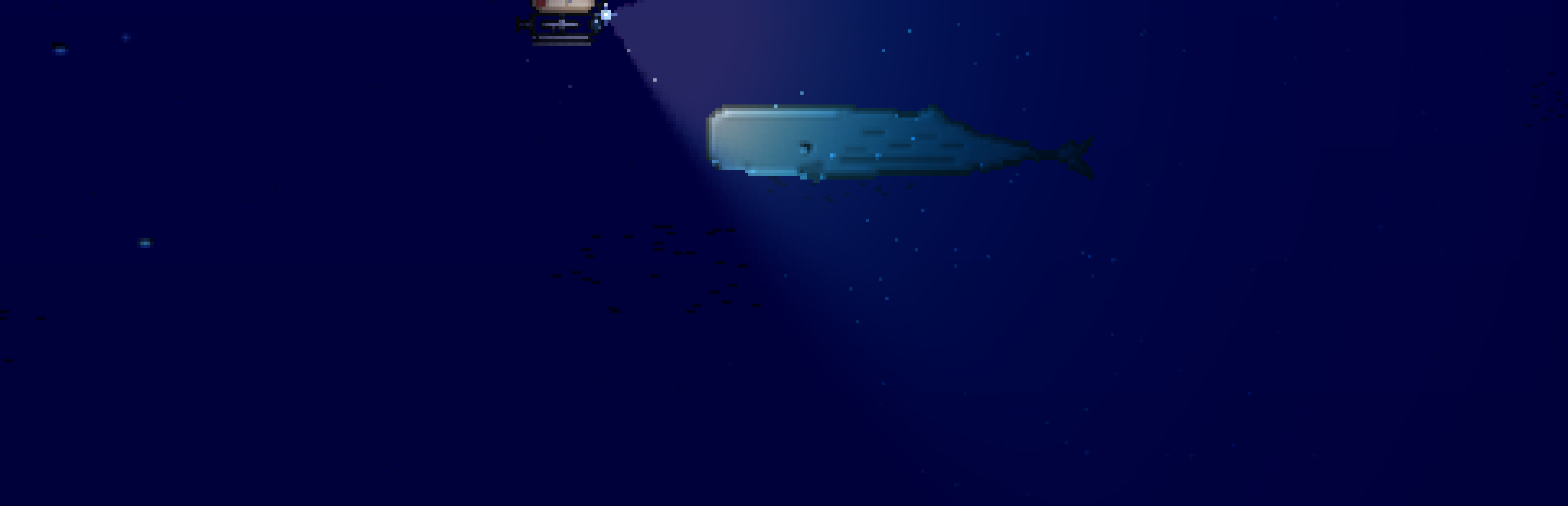
The whale is 800 × 450, the others 616 × 346. Pixel exact, each under 1 MB, free to embed.

Screenshots
1920 × 1080 PNG. Click for full size.
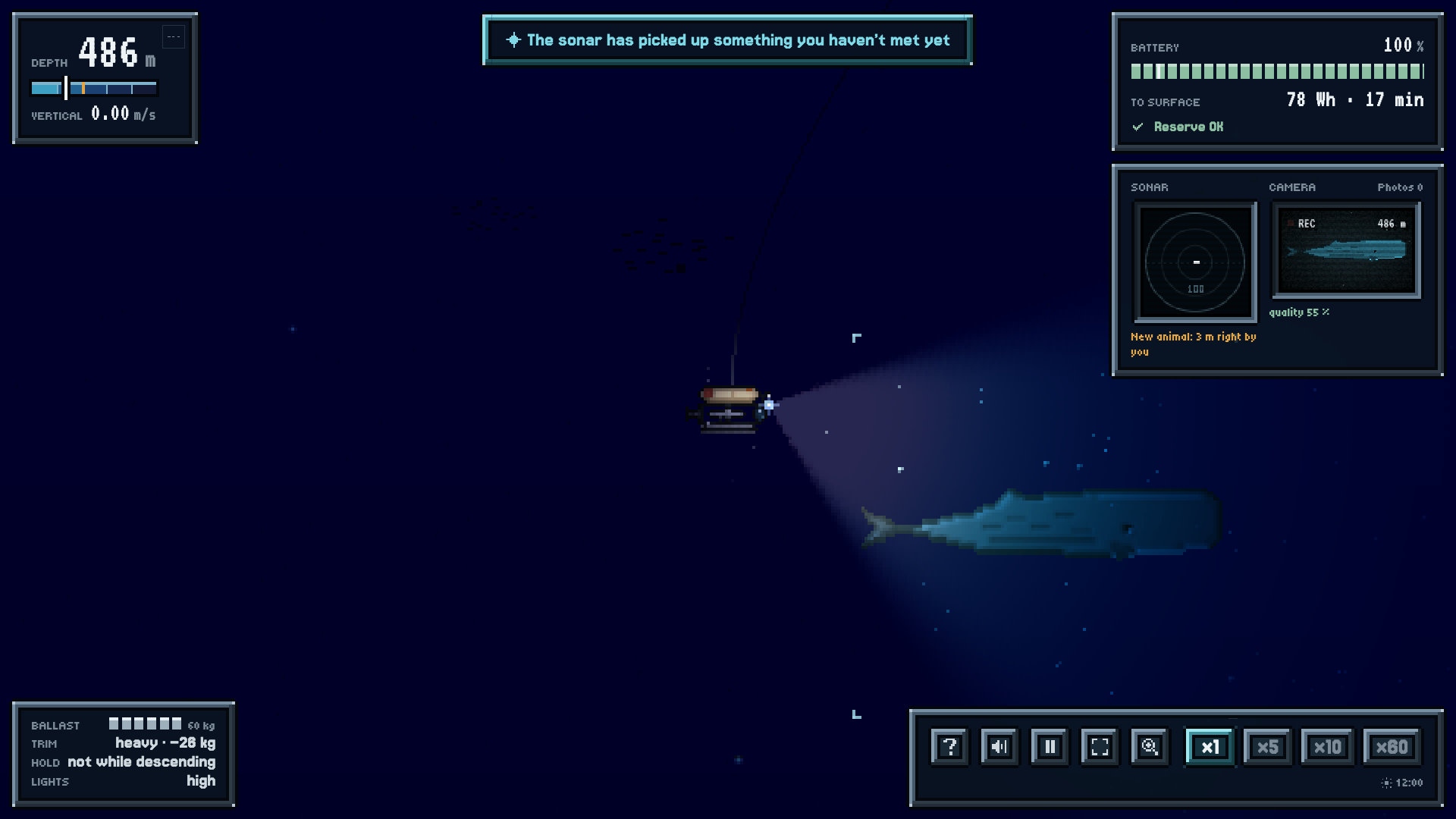
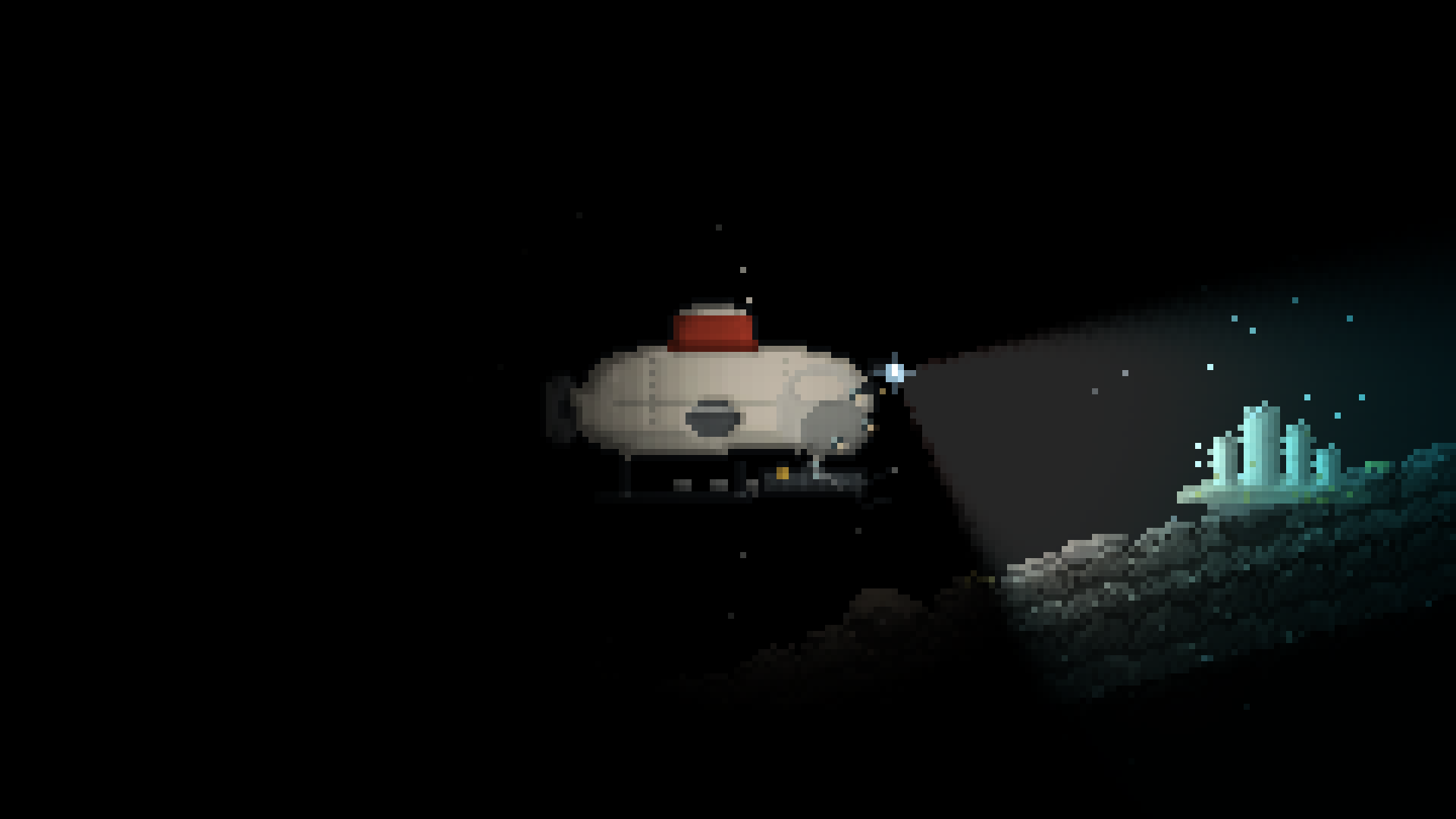
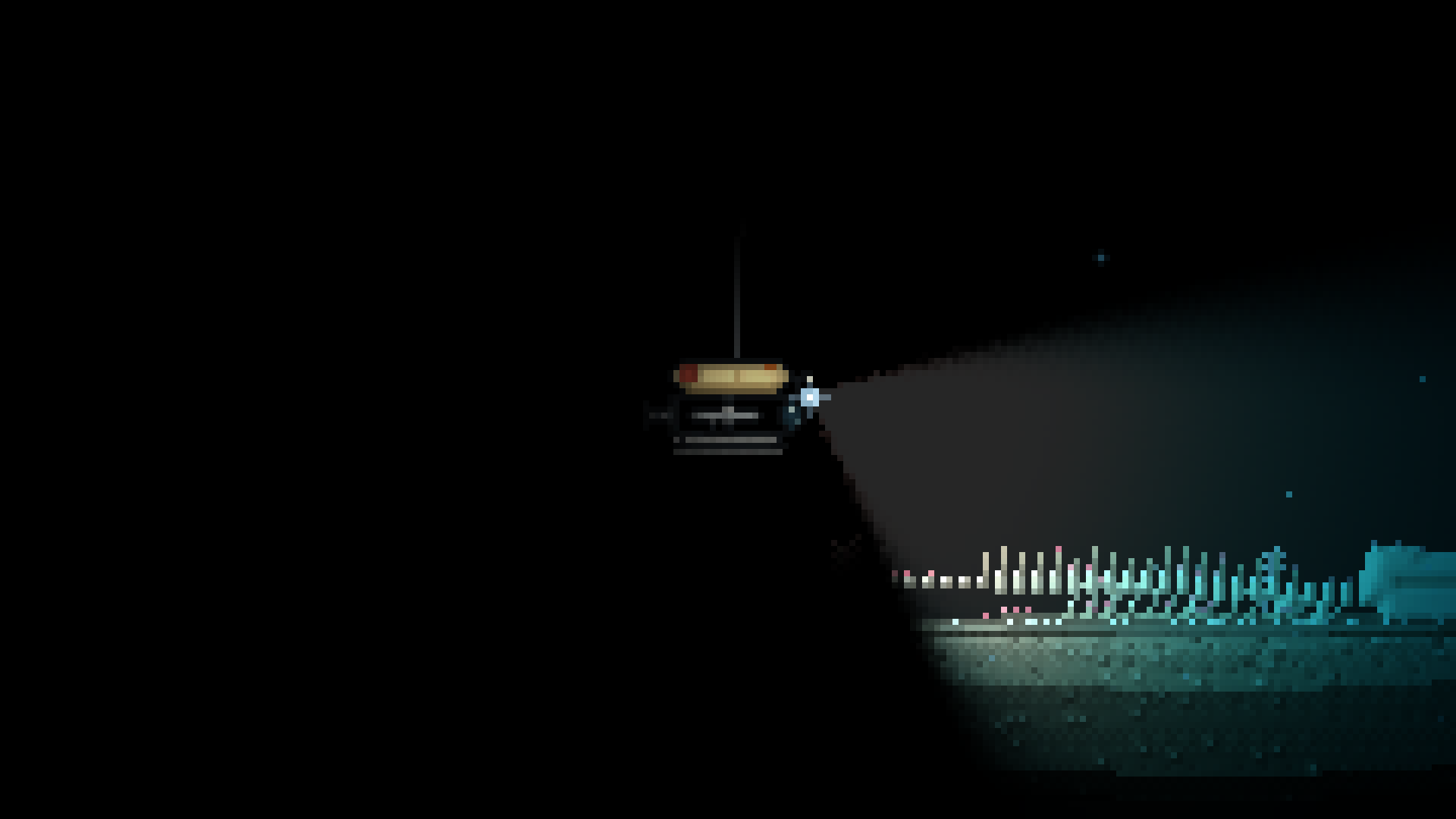
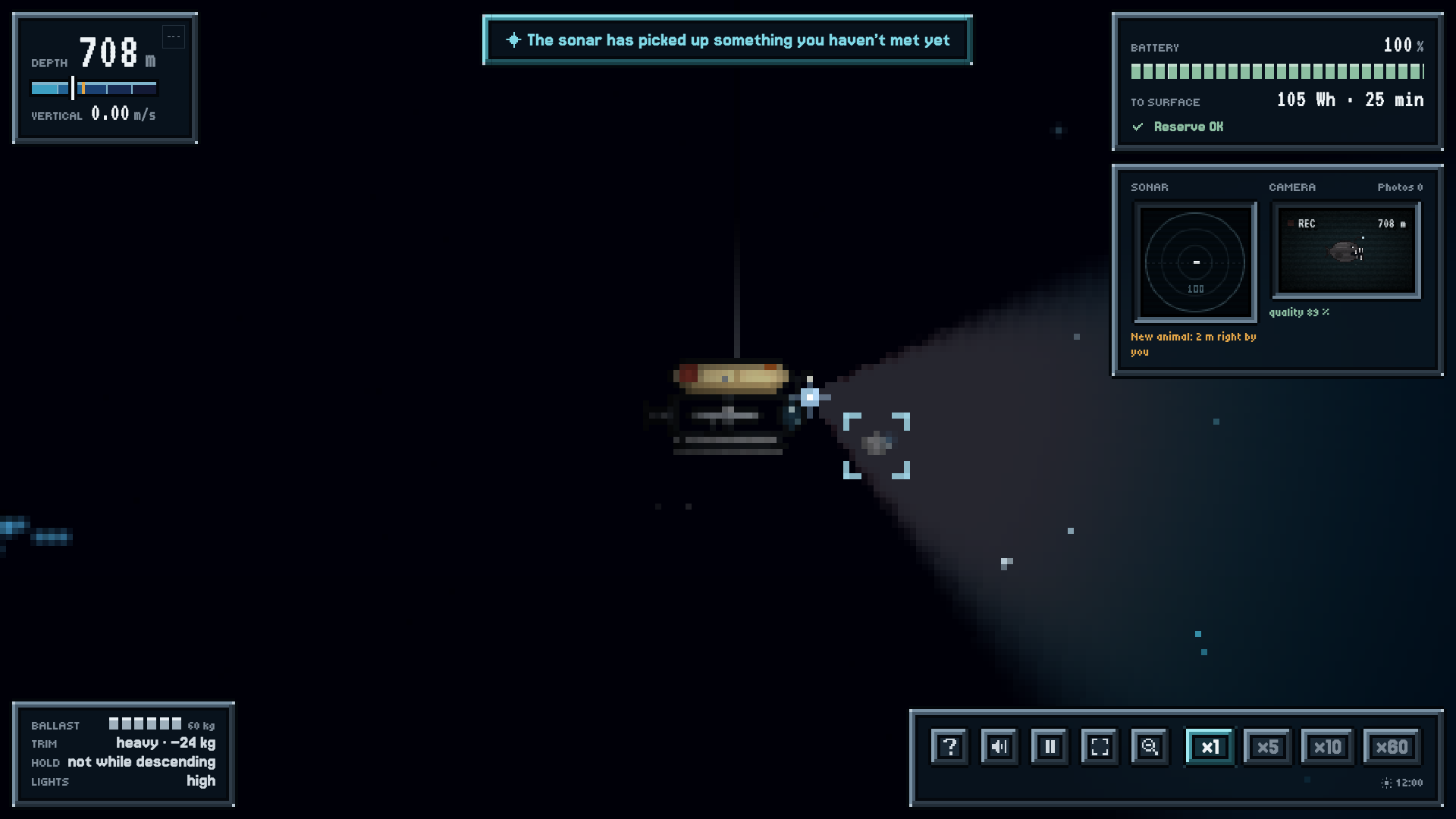
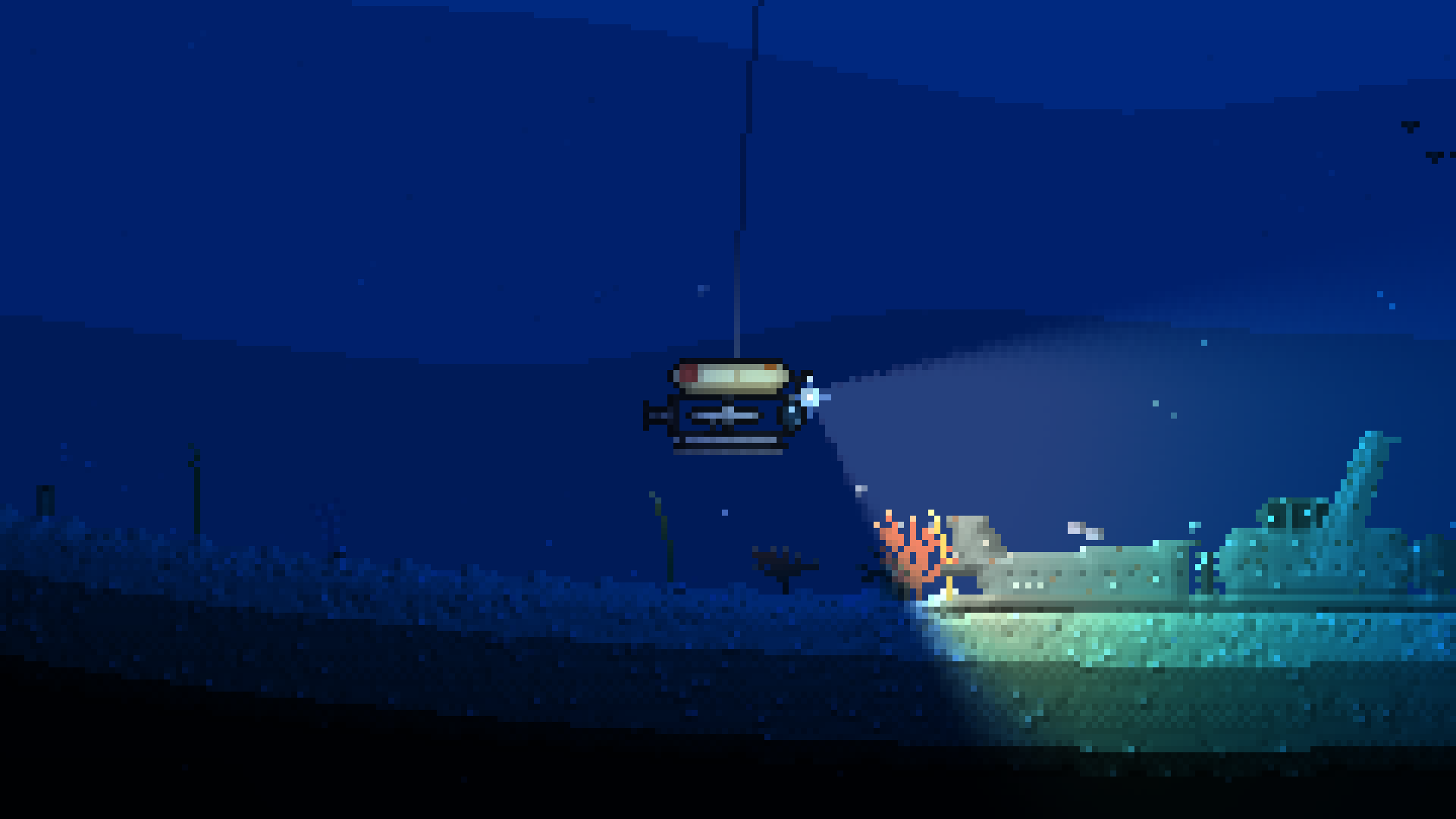
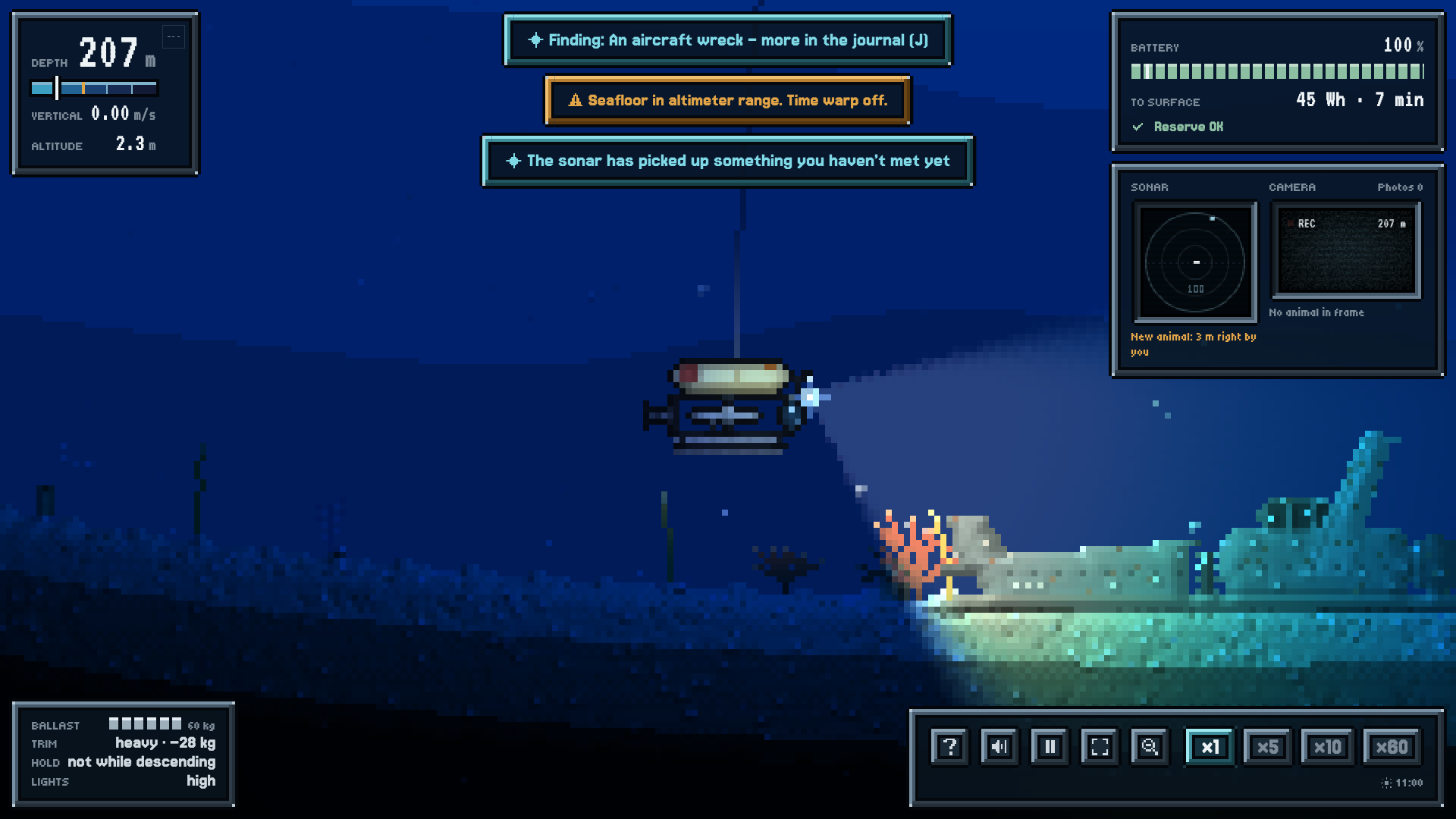
The wrecks are invented for the game, as the game itself says.
Logo & art

The science in the game
HADAL simplifies, but it does not lie. Pressure, light, buoyancy, battery and hull follow real relations; each species lives only within its published depth range and links its source in the in-game journal. A few examples:
| In the game | Depth | Source |
|---|---|---|
| Vampire squid | 600–900 m | MBARI |
| Swimming sea cucumber | 461–5,689 m | NOAA Ocean Exploration |
| Mariana snailfish | 6,198–8,076 m | Overview |
| Supergiant amphipod | 3,890–8,931 m | Overview |
| Liquid CO2 at the Champagne vent | NW Eifuku | Lupton et al. 2006 |
| Whale fall | seafloor | Smith et al. 2015 |
| Plastic bag in Challenger Deep | 10,898 m | Chiba et al. 2018 |
How it is made
HADAL is made by one developer, Tomáš Stankovič (slinto), in TypeScript with Phaser 4. The pixel art is drawn by code from palettes and pixel maps (normal maps for the lighting are derived from it automatically), and every sound is synthesised live with Web Audio.
Coverage
- Phaser.io, 19 Oct 2026: HADAL: A Deep-Sea Exploration Game Built with Phaser 4
Contact
Tomáš Stankovič, tomas@tomasstankovic.dev
Interview requests and questions about the science are welcome.